Note: this project was completed in Spanish as part of a Coderhouse course
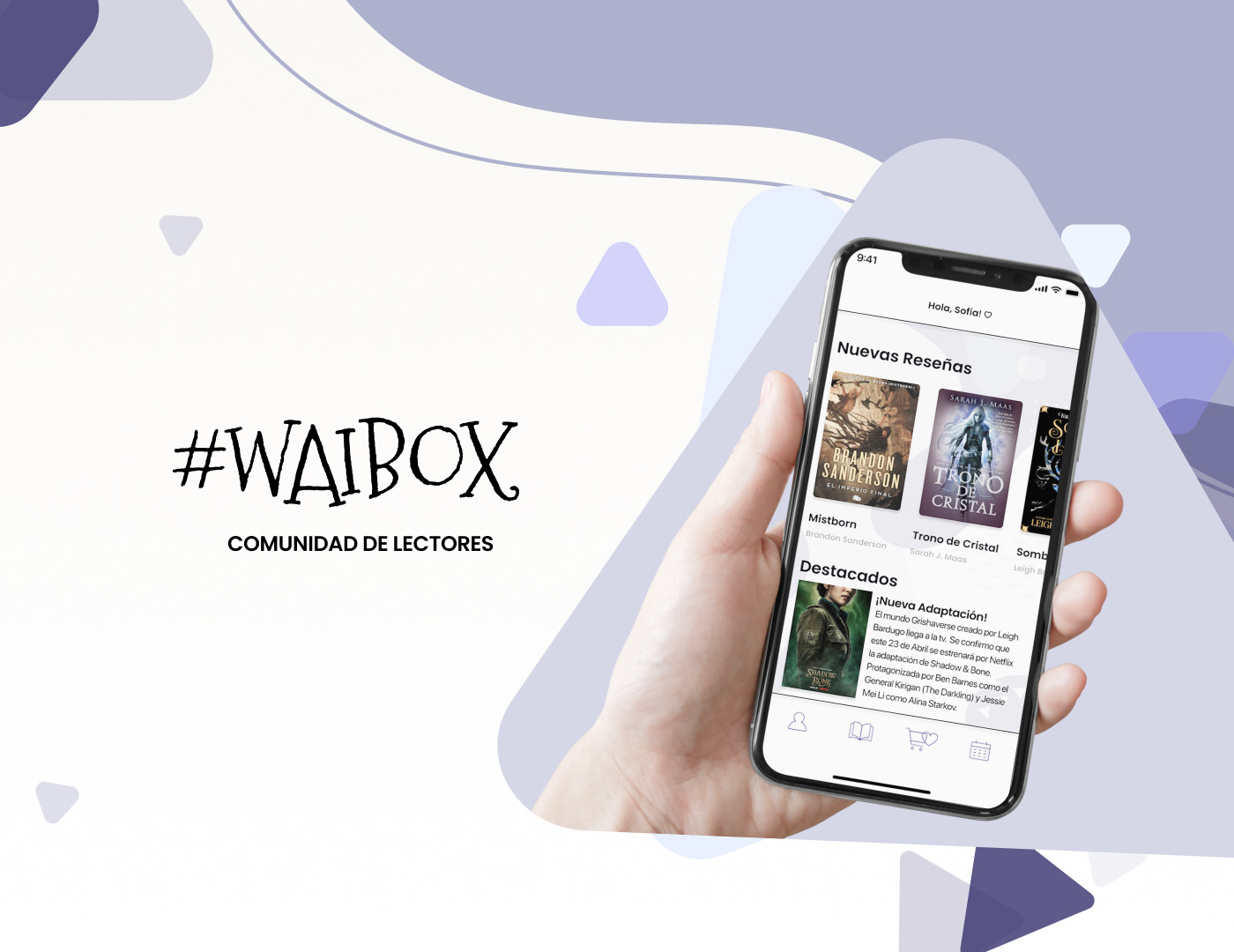
Role: Research, IA, wireframes, usability testing, UI · Timeline: 4 months, 2021 · Tools: Figma, Photoshop, Whimsical
Overview
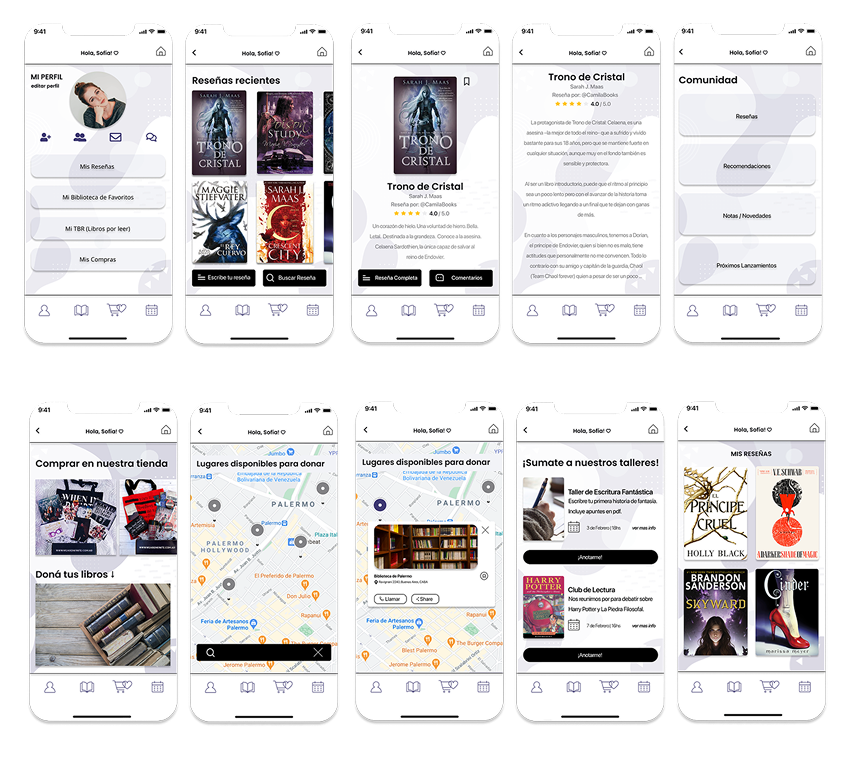
A community app for readers, built around a book-donation map.
I set out to design a donation tool. Research pointed elsewhere: the problem people felt more strongly wasn't access to books, it was how isolating reading had become.
Argentina, 2020 / 2021 — bookstores closing, libraries inaccessible, and reading communities growing on platforms never built for reading.
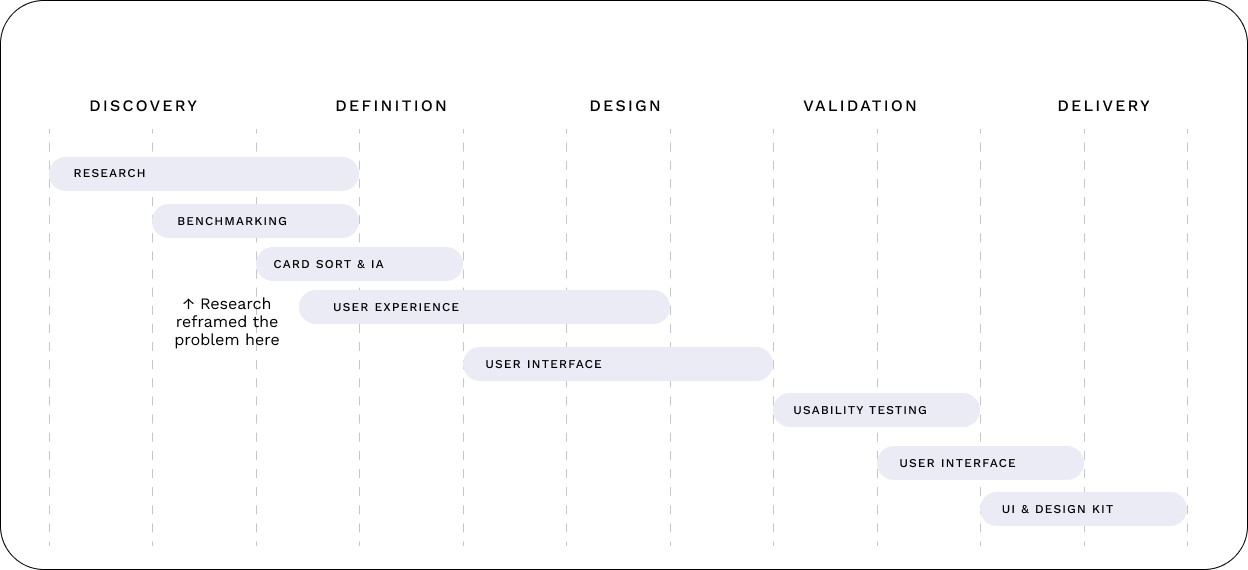
Competitive audit of 3 apps · open card sort with 10 participants · 2 user flows · usability testing with 5 participants · iOS pattern adaptation · UI kit
Process
Problem
No single space connected readers, donors and receiving organizations.
Goodreads, Wattpad and Alibrate worked as personal reading logs — social features two to four steps deep, none connecting readers to physical books. People who wanted to donate had no current information on where to bring them.
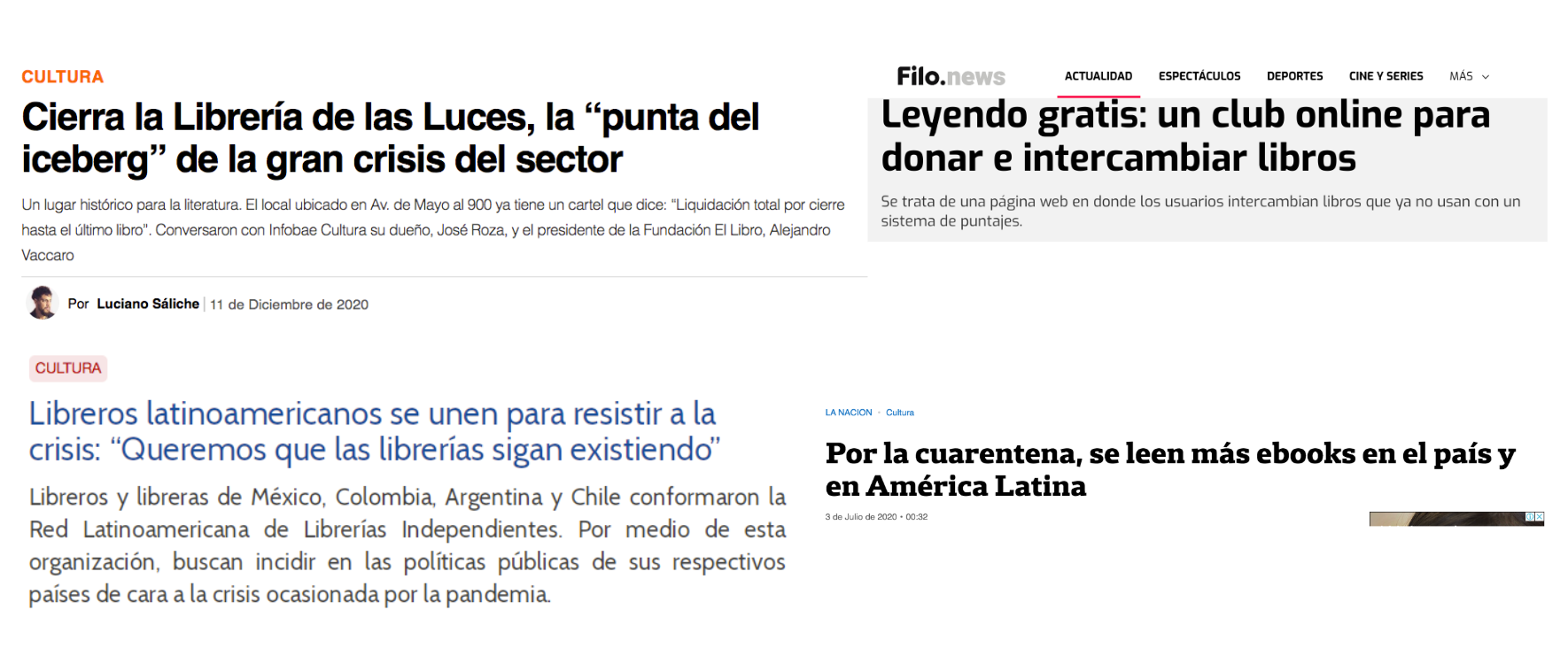
Media coverage documenting bookstore closures and the decline in book consumption in Argentina throughout the COVID-19 pandemic and the ongoing economic crisis.
Where the insight came from
This started as a blog post, not a brief.
My blog post about where to donate books became its most-read piece (over 3,500 reads)
and the comments kept asking one question: I have books to give, where do I take them?
The limits: Comments from a self-selected audience, not interviews. A signal to investigate, not validation.
My blog post about where to donate books became its most-read piece (over 3,500 reads)
and the comments kept asking one question: I have books to give, where do I take them?
The limits: Comments from a self-selected audience, not interviews. A signal to investigate, not validation.
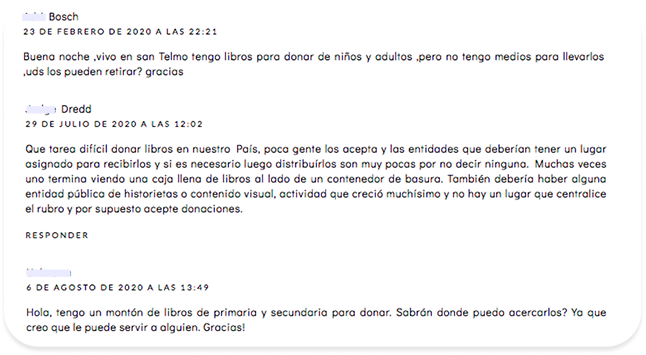
"I live in San Telmo, I have children's and adults' books to donate, but no way to get them there. Could you pick them up?" — blog comment, Feb 2020
"Donating books here is hard. Few places accept them, and hardly any have somewhere assigned to receive and redistribute. You often end up seeing a box of books next to a dumpster." — blog comment, Jul 2020
"I have a pile of primary and secondary school books to donate. Any idea where I can take them?" — blog comment, Aug 2020
"Donating books here is hard. Few places accept them, and hardly any have somewhere assigned to receive and redistribute. You often end up seeing a box of books next to a dumpster." — blog comment, Jul 2020
"I have a pile of primary and secondary school books to donate. Any idea where I can take them?" — blog comment, Aug 2020
Changing Direction
Donation-only was my initial concept , and would have been simpler to scope and test. Broadening it risked building a weaker Goodreads. I took that risk because community was the need people voiced without being asked, and it's the decision I'd most want to validate before making again.
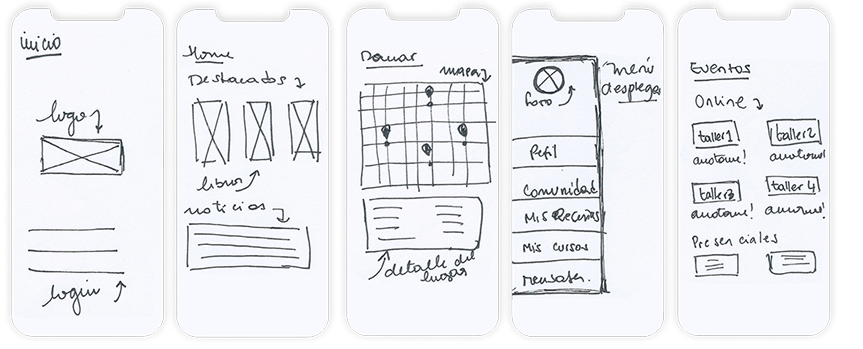
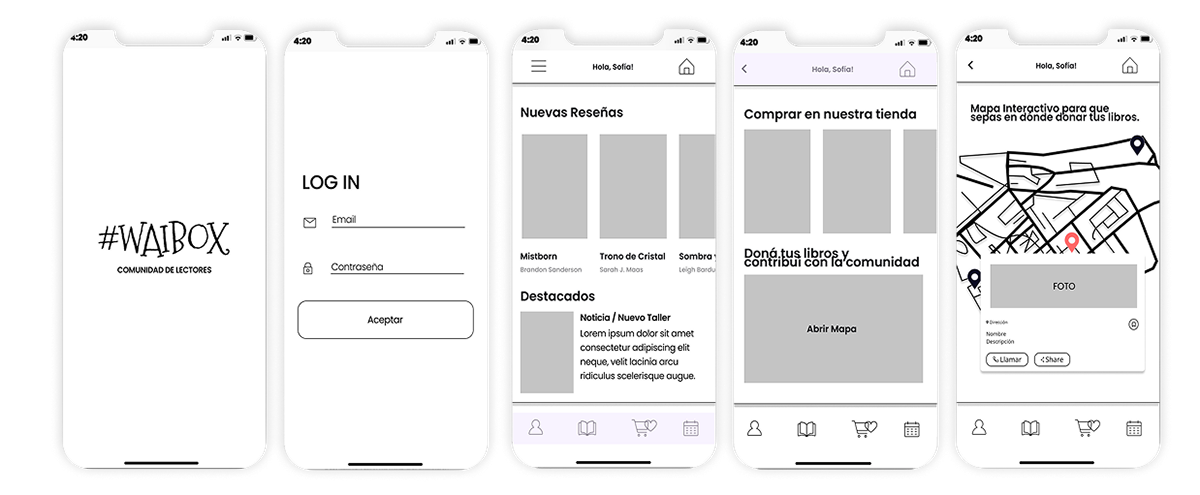
Usability testing
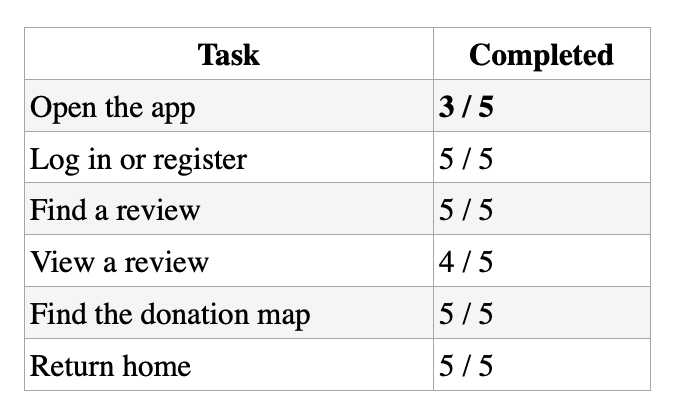
Everything after onboarding worked. The first screen didn't.
Five participants, low-fidelity prototype, own choice of path.
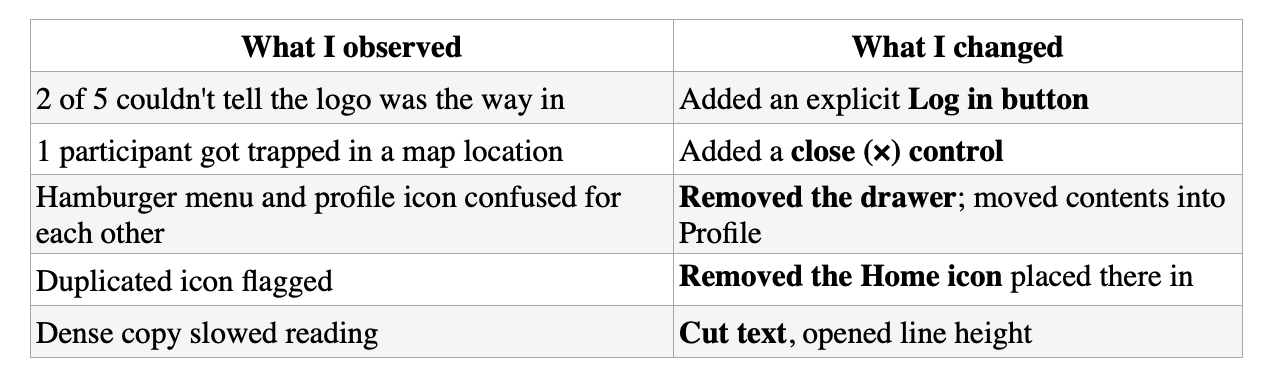
Navigation, search and the map held. The failure sat in the entry point: the logo was the tappable element and nothing said so. The architecture worked; the affordance didn't.
What I'd change: I only ran one round. A second pass would have confirmed the fix instead of assuming it.
Navigation, search and the map held. The failure sat in the entry point: the logo was the tappable element and nothing said so. The architecture worked; the affordance didn't.
What I'd change: I only ran one round. A second pass would have confirmed the fix instead of assuming it.
Visual Design
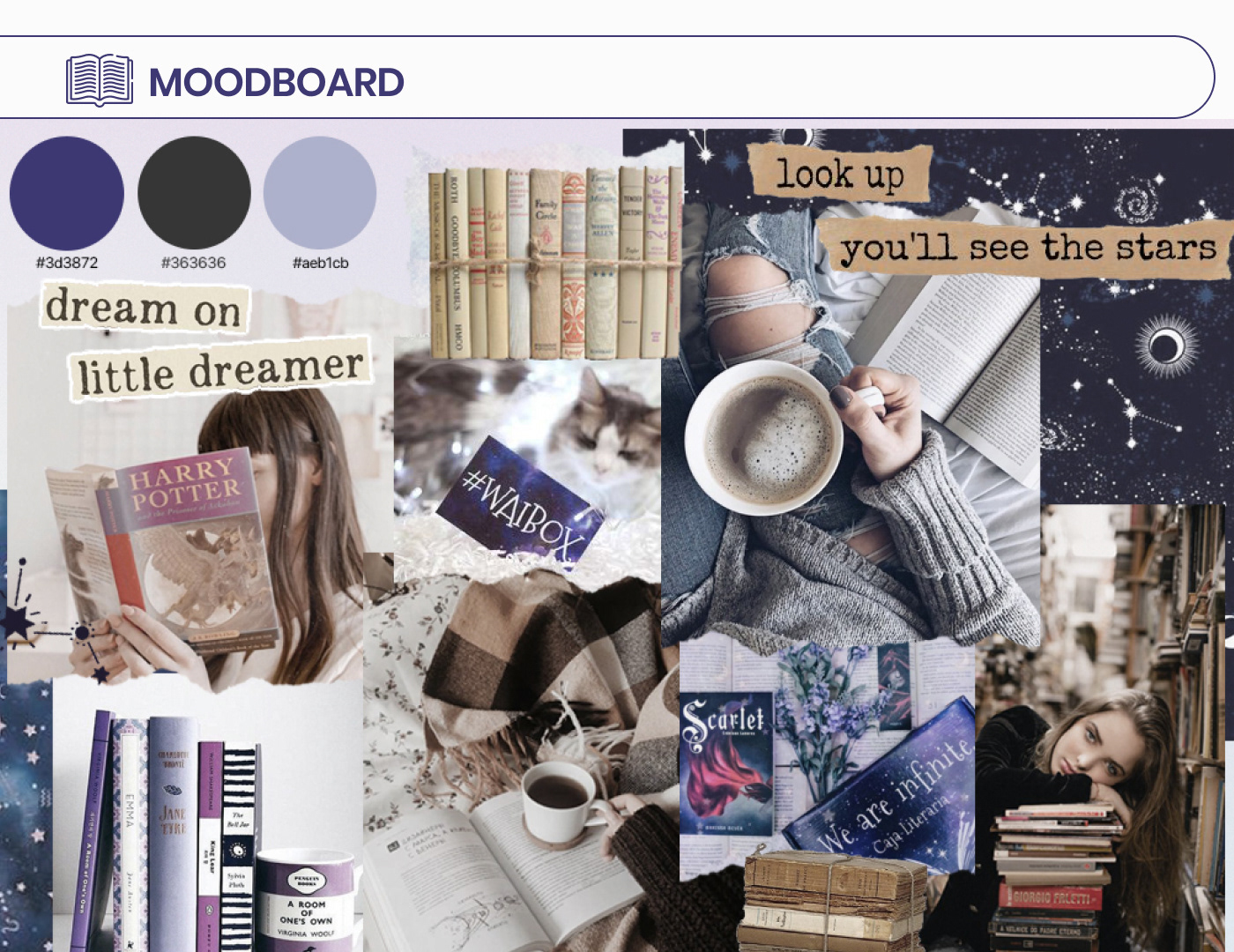
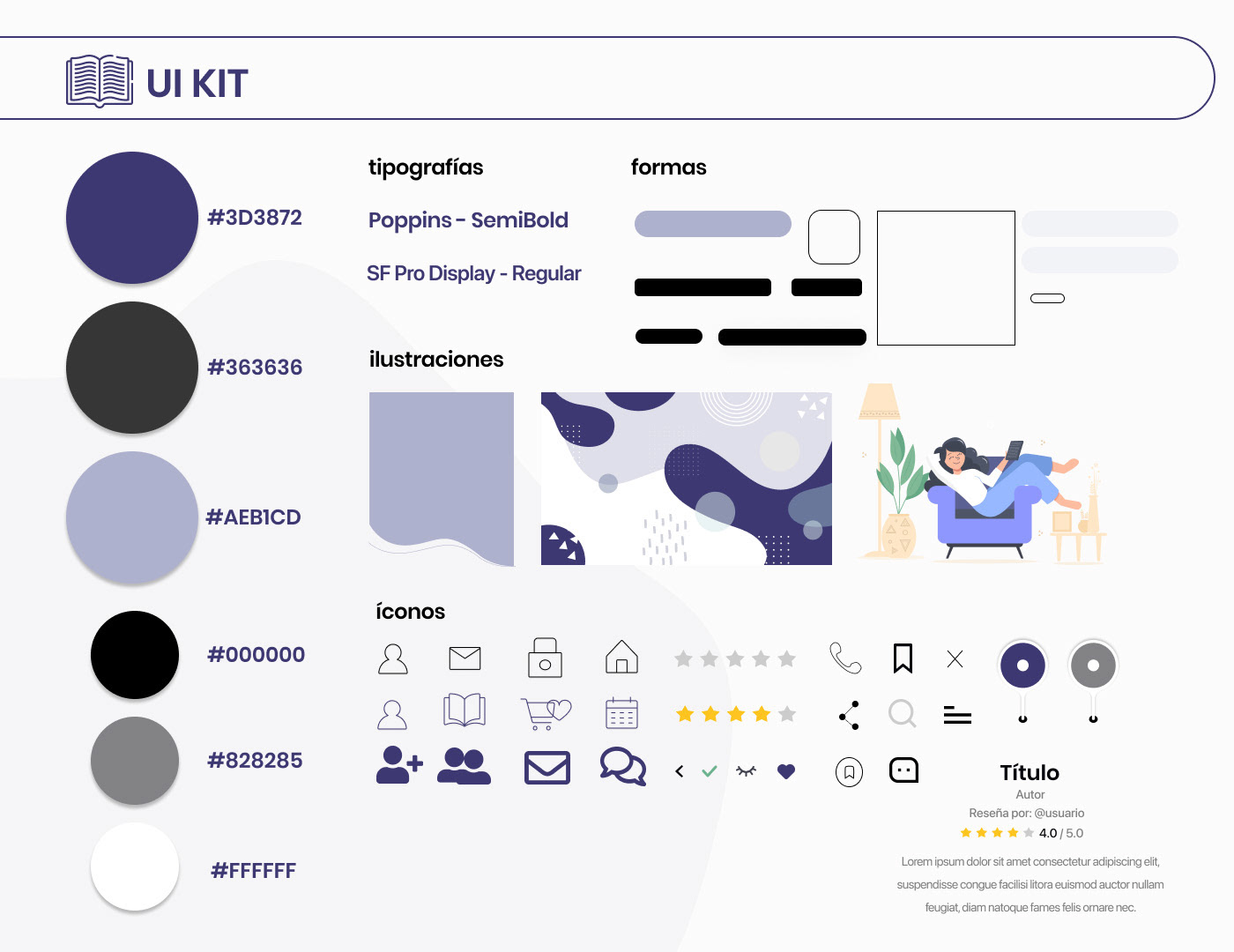
Poppins SemiBold with SF Pro Display. Native keyboard states, iOS tab-bar conventions, action sheets styled to the app but behaving as standard.